Elf’s wish to seek assisted death
All My Puny SorrowsElfrieda Von Riesen’s wish to seek assisted death places Yolandi Von Riesen between her sister’s request and the limits of what she feels able to do. Yolandi first refuses to take Elfrieda to Switzerland, then studies possible routes, funding, and the hospital circumstances while trying to keep open the possibility of life. Elfrieda’s death leaves the plan unrealized and turns the question of whether Yolandi should have acted into a lasting source of grief and self-reproach.
The request and the first refusal
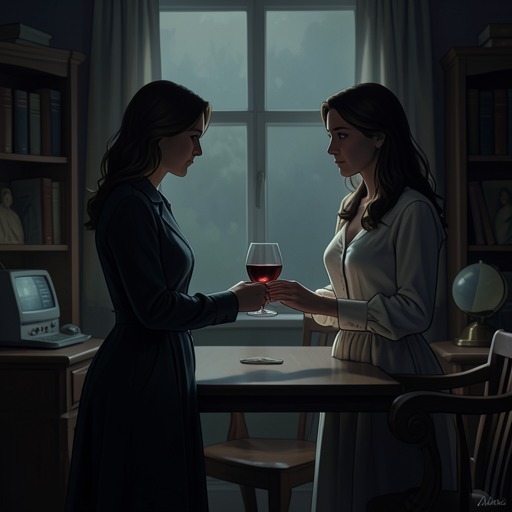
Yolandi’s response to Elfrieda’s plea is immediate: she will not take her to Switzerland. Elfrieda asks her to do this final thing and begs her, but Yolandi rejects the framing of it as one last act, calling that idea morbid. The exchange establishes the central conflict without resolving it. Yolandi does not deny the depth of her sister’s distress; she resists becoming the person who carries out the requested journey.
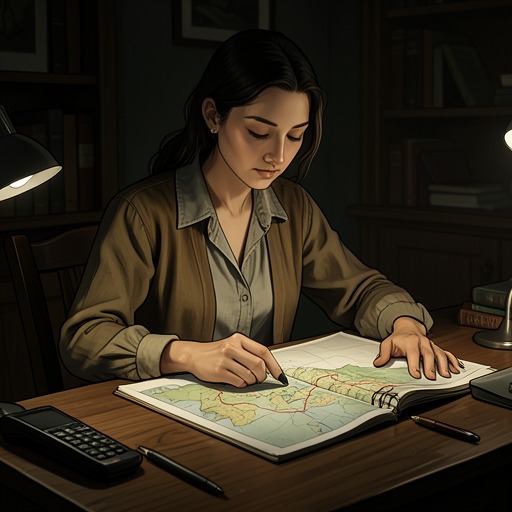
The refusal is not the end of Yolandi’s consideration. Later, after learning that Nic is travelling to Spain, she searches online for Nembutal there and for information about assisted death for people with mental illness. She discovers that, as she understands it, Swiss law permits assistance in dying when there is no selfish motivation and does not restrict the protection to Swiss citizens. She recognizes this as an explanation for why Elfrieda had asked her to go to Switzerland. What had first seemed like an unbearable request now appears to Yolandi to have a legal route, though not necessarily a straightforward one.
Routes considered and practical obstacles
Yolandi weighs two possibilities. One is Mexico, where she imagines obtaining Nembutal; the other is Zurich, where the process might be lawful but would depend on whether doctors judged Elfrieda’s suffering sufficient. Yolandi also considers the uncertainty of her own role and whether her actions could count as encouragement. Both plans would require Nic and Lottie to agree. Her research therefore does not produce a settled course: it sharpens the distinction between what may be legally possible, what would depend on professional judgment, and what Yolandi can accept doing herself.
A conversation with Julie makes that uncertainty visible in personal terms. Julie questions whether the Swiss clinic is intended only for people who are already dying. Yolandi replies that, according to her research, people with mental illness may also qualify under the category she describes as weariness of life. She argues that Elfrieda could be understood as dying in that broader sense. Julie does not offer clear agreement. The exchange leaves the law’s reported scope alongside the friends’ unresolved judgment about whether the option is right for Elfrieda.
Planning during hospitalization
While Nic and Lottie spend much of their time at the hospital, Yolandi’s conversations with them are brief and focused on updates. The family remains in suspension: there is little change, and Yolandi spends hours researching the Swiss option without discussing it with anyone in Toronto. She approaches a bank for a loan of twenty thousand dollars, estimating that it could cover travel, her return, the clinic’s treatment, a hotel, cremation, and an urn. She offers her Rodeo Rhonda books and a hoped-for advance as evidence of future income, but without collateral or a book contract the bank will not lend her the money.
The financial problem is bound up with the family’s ability to act together. Elfrieda has money, but it is in a joint account with Nic, who would notice a large withdrawal. Yolandi asks him whether Elfrieda has mentioned moving to Toronto; he says he has not heard that, but that she could come if she wanted. He asks for no details. Yolandi is also working to finish another Rodeo Rhonda book and has only a small amount remaining from an arts grant and from the sale of the family’s Winnipeg house. Her attempt to make a plan is thus measured in hospital calls, uncertain funding, and unfinished work as much as in travel research.
Yolandi calls the nurses’ desk repeatedly, asking for reassurance that Elfrieda will not be allowed to leave the hospital. She hears that the staff are berating Elfrieda for not following the programme, lecturing Lottie about tough love, and threatening shock treatment. The psychiatrist is often unavailable to speak with Nic. Nurses tell Yolandi to make tea and calm down; when she tries to object during a late-night call, she stops herself and apologizes. These details show a family seeking control and information within a situation in which they have little access to either.
The call, the death, and the unresolved choice
Yolandi arranges for Nic to call from his cell phone during visits and hold the phone to Elfrieda’s ear. She tells her sister that she is still working out what to do, that she will see her soon, and that she needs more time to finish work before returning to Winnipeg. For a time Elfrieda does not speak. Then, in a later call, she speaks clearly and asks when Yolandi is coming to get her. The question gives the plan a direct human urgency: the research and delay are not abstract to Elfrieda, who is waiting for her sister to act.
After Elfrieda dies, Yolandi tells Nic that she wonders about Zurich: Elfrieda could have died peacefully and not alone, which Yolandi understands to be what her sister wanted. Yolandi says she failed. Nic tells her that no one is to blame, while also saying that he should have fought harder to keep Elfrieda in the ward. Their different regrets do not settle responsibility; they show how the same outcome leaves each of them searching for a point at which another choice might have changed it.
In a letter dated May 3, 2011, Yolandi apologizes to Elfrieda for not taking her to Zurich. She recalls Auntie Tina’s promise that forgiveness might one day feel like a sudden lightness, but does not claim that such forgiveness has arrived. In another later address to her sister, Yolandi acknowledges that Elfrieda knew she lacked the nerve to take her to Zurich and knew she would not come to Toronto. The admission gives the unrealized plan a painful double meaning: it was a possibility Yolandi investigated, but not one she could make real in time.
Significance
The wish to seek assisted death is presented through decisions and impediments rather than a single declaration. Swiss law, as Yolandi reads about it, offers a possible framework; Mexico appears as a different, less formal alternative; neither removes the need for consent, money, medical assessment, and Yolandi’s own willingness to participate. The novel keeps those practical and ethical questions entangled instead of treating legal availability as an answer to them.
The state also shapes the sisters’ relationship after Elfrieda’s death. Yolandi’s investigations testify to her effort to understand the request, while her refusal, delays, and later apologies expose the gap between loving someone and knowing how to respond to a wish for death. The repeated question of whether she could have acted differently remains unresolved. In that sense, the Swiss plan becomes not only a proposed journey but the measure Yolandi uses to revisit her sister’s last requests and her own limits.